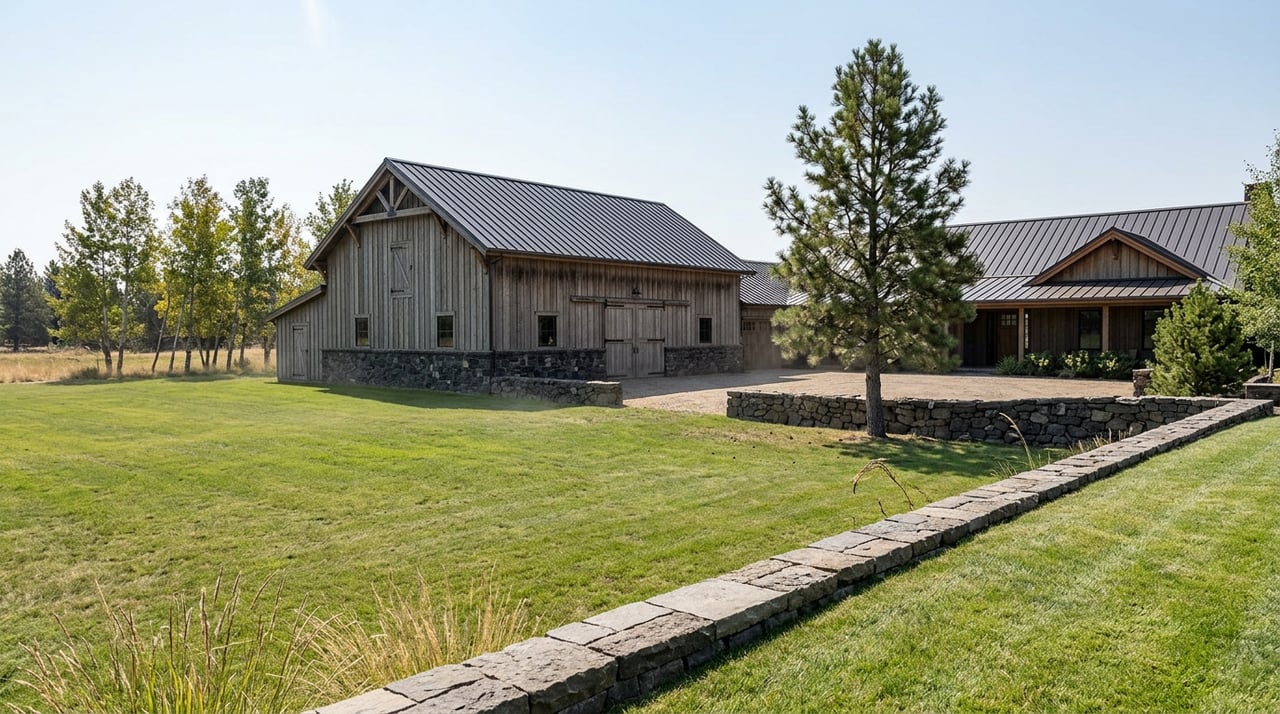
Two nine-acre parcels outside Bend can list for the same price, sit the same distance from downtown, and describe themselves the same way in the MLS: irrigated, fenced, horse-ready. This summer, one of those parcels kept its pasture green through August. The other went dry on July 2, the earliest shutoff in its irrigation district's history, and stayed that way for the rest of the season.
The difference wasn't acreage. It wasn't price. It was a document most buyers never ask to see: the water right certificate, and specifically the priority date printed on it.
The line nobody drew until this year
Oregon water law runs on a simple rule called prior appropriation. In a normal year, that rule sits quietly in the background. This was not a normal year.
Statewide snowpack melted out at the earliest date on record, tying 2015, and Central Oregon Irrigation District's managing director, Craig Horrell, described the region entering the season with 11 to 15 percent of normal snowpack. The Redmond Spokesman reported that by June, state regulators had shut off all junior water diversions between Bend and Redmond to protect senior rights holders, something the Deschutes Basin watermaster, Jeremy Giffin, said officials believe had never happened before.
That single decision is the whole story. If your acreage carries a junior water right, and the property next door carries a senior one, this summer you learned exactly what that means in practice, not in theory.
What actually happened, district by district
The numbers vary enough that "irrigated acreage" stopped meaning one thing this year. Arnold Irrigation District, which serves more than 600 ranches and farms across southwest and southeast Bend, shut off deliveries entirely at 5 a.m. on July 2, calling it the earliest shutdown in the district's history. Three Sisters Irrigation District cut deliveries to 20 percent by July 30, then to 10 percent by mid-August, with its manager, Emelia Ellington, noting the creek that feeds it had never run this low. Tumalo Irrigation District's manager, Chris Schull, said Tumalo Creek's runoff came in so far below average that the district had to start drawing from Crescent Lake storage two full months earlier than usual, well ahead of when it typically taps that reserve.
| District | 2026 season outcome |
|---|---|
| Arnold ID | Full shutoff July 2, earliest on record |
| Three Sisters ID | Cut to 20% by late July, 10% by August 14 |
| North Unit ID | The Redmond Spokesman reported an allotment of 1.3 acre-feet/acre, down from prior years |
| Tumalo ID | Drew Crescent Lake storage two months early |
| Central Oregon ID | Delivery cut to roughly 70% by early July despite senior standing |
Even Central Oregon Irrigation District, which ProPublica reports holds rights to more than half the volume of the Deschutes River, wasn't untouched. Falling natural flows pushed its own deliveries down to around 70 percent by early July.
Behind those percentages, the reservoirs tell the same story. Wickiup Reservoir sat at 93 percent capacity in April, its highest level in several years. By mid-August it had dropped to 49,770 acre-feet, about a quarter full, compared to 82,228 acre-feet at the same point the year before. Across Crane Prairie, Wickiup, and Crescent Lake combined, roughly a third of the region's remaining stored water disappeared in six weeks between July and mid-August.
The catch even inside a single district
Here's the part that matters most for anyone comparing two listings on paper. Seniority isn't just a district-level fact. It varies parcel by parcel, even within the same irrigation district.
Tumalo Irrigation District's own water user handbook notes that patron rights carry priority dates ranging from 1900 to 1913, meaning two neighboring Tumalo properties can hold rights more than a decade apart in seniority. The Nugget reports that Three Sisters Irrigation District's oldest rights date back to 1869 through 1895 and are billed at a flat two acre-feet per acre regardless of the district-wide cutback percentage. That's why a parcel's specific water-right terms matter, even when properties share a canal.
None of this shows up in a standard listing description. It shows up in the water right certificate on file with the Oregon Water Resources Department, and in the delivery records the irrigation district keeps for that specific parcel.
Why this matters more for buyers than for sellers
A lot of guidance aimed at Central Oregon acreage transactions focuses on what sellers need to disclose before closing: well tests, septic records, whether water rights actually transfer with title. Those documents matter, but they answer a narrower question than the one a buyer comparing multiple properties actually needs answered.
The disclosure paperwork tells you whether a right exists. It doesn't tell you how that right performs when the Deschutes Basin has one of its worst water years in recent memory, as officials described 2026 to be. That performance question is now answerable, because this summer functioned as an unplanned stress test across every district in the basin.
For a buyer weighing a parcel in Tumalo against one in Alfalfa or Powell Butte, the useful questions have shifted. Not just how many acres carry water rights, but which irrigation district holds them, what priority date is attached, and how that specific right performed during the 2026 season compared to the district average. Central Oregon Irrigation District's service territory alone stretches across Terrebonne, Redmond, Bend, Alfalfa, and Powell Butte, so two parcels in different towns can carry the same district's water and the same seniority profile, while two parcels in the same town can carry different districts entirely.
For hobby farmers, equestrian buyers, and anyone planning to run livestock on purchased pasture, this is the difference between a property that maintains its hay yield in a dry year and one that doesn't. Forage producers on curtailed water can lose a cutting or see yields drop hard, which for a livestock operation translates directly into higher feed costs the following winter.
What to actually ask before you compare price per acre
Before treating two acreage listings as comparable because they're the same size and price, get three things in writing: the irrigation district's name, the priority date on the water right certificate, and how that specific right was delivered this season versus a normal year. The district office itself is the fastest source. Central Oregon Irrigation District and Tumalo Irrigation District both post current-season delivery updates and drought status directly on their websites, and both will speak to certificate history for a specific parcel on request.
This isn't a step that shows up in a typical showing, and it's easy to skip when a property looks right on every other dimension. But after a season that curtailed junior rights between Bend and Redmond for the first time on record, treating the water right as a footnote is no longer a reasonable shortcut. It's the variable that decided, this year, which acreage actually functioned as advertised.
If you're weighing acreage or an equestrian property around Bend, whether you're relocating from the Bay Area or upsizing locally, this is exactly the kind of parcel-level homework that changes which listing makes sense for your plans. Julie Reber has spent years inside Central Oregon's rural and equestrian market, including as a property owner herself, and knows which questions to ask an irrigation district before you fall in love with a barn. Schedule a free consultation to talk through what a specific property's water history actually means for your plans.
This article is general information, not legal, tax or financial advice. Consult a qualified professional about your situation.